
Every few years, there’s a groundbreaking use of technology that leads to a film you wish you worked on. This particular technology started a year earlier with Sky Captain and the World of Tomorrow, but it took visionary Robert Rodriguez to show how it could work. The proof-of-concept he shot attracted an all-star cast, and I’m sure it could’ve brought in an equally heavyweight crew. Except, Rodriguez likes to do a lot of the job himself and in his studios in Texas, so most missed out on the opportunity to be a part of this bold and largely successful experiment. (The sequel, A Dame to Kill For, is even more fluid and advanced, but the storytelling was poor so it’s rarely viewed.)
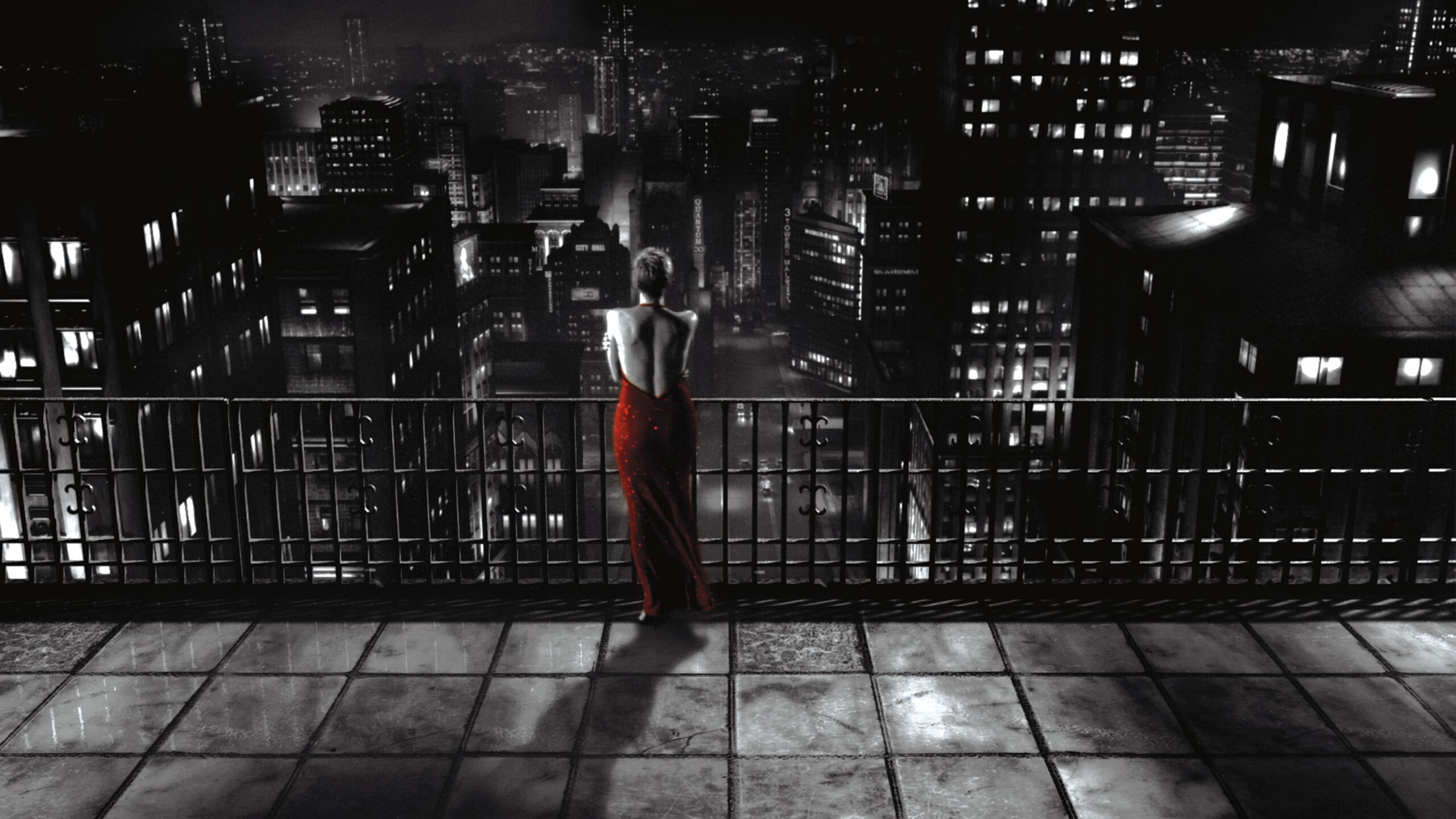
Pick a shot. Any shot. Any frame of this movie and you will see visual cine-magic. It’s film noir, Black & White, with flashes of color, and highly stylized digital backdrops. Rodriguez pushed his talents in every department, creating not only a film geeks dream project, but a film so skillfully imaginative even critics had to take notice (if they could get past the gratuitous ultra-violence.) SIN CITY revived the career of Mickey Rourke, playing the most brutal tough guy (with a big soft heart) you will ever meet, and featured Elijah Wood as the town’s creepiest psycho. Plus, there’s dueling banjos of cool between Clive Owen and Benecio del Toro, and a solid Bruce Willis matching up against the gleefully hideous Yellow Bastard (Nick Stahl).
Director/D.P. Robert Rodriguez took care in lighting his cast so that they weren’t swallowed up by the scenery. Everybody looks like a movie star (except maybe Nick Stahl, who’s not supposed to look very human…but he’s beautifully grotesque.) The make up wizards at KNB FX did a superb job in transforming Mickey Rourke, Benecio Del Toro and Nick Stahl into Frank Miller’s comic book creations. Stahl’s Yellow Bastard is the obvious transformation, but Rourke’s Marv (with his large forehead that vertically matches his square jaw) is the real masterpiece.
Frank Miller’s drawings make for excellent storyboards, but editing is really where the comic book becomes an actual movie. Rodriguez has always been a great editor, but he pushed his abilities here, filling in the space between Miller’s panels and making everything snap to cinematic life.


Leave A Comment