
“You are the autumn people. Where do you come from?
The dust. Where do you go to? The grave.”
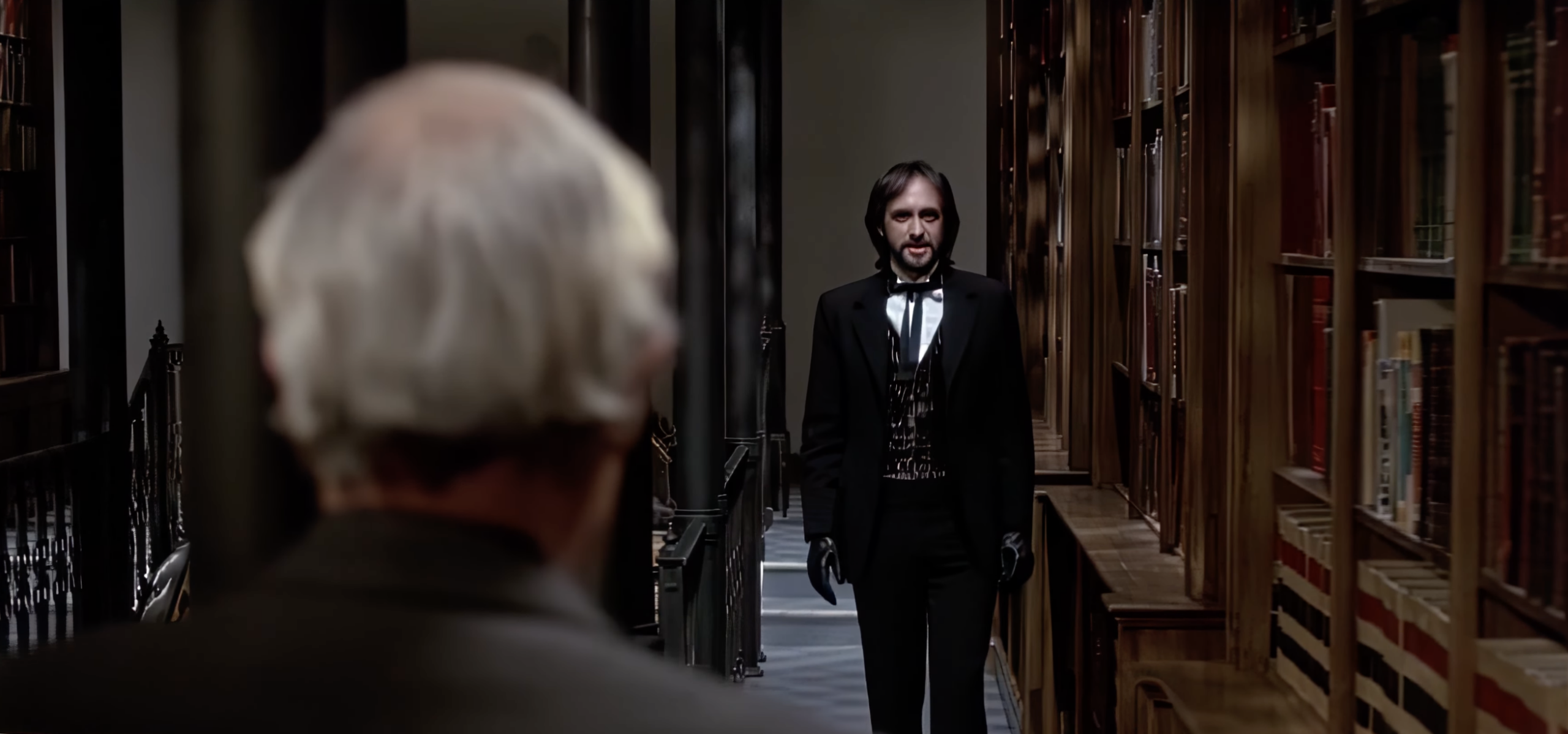
The film opens with a good evocation of Americana, centered around a small town Main Street at the turn of the century. There’s a carnival of the damned, staffed by people who have sold their soul to Mr. Dark for an ironic price. (A woman who longs for beauty sees her prettier self for only an instant before going blind.) The plot reminded me of Stephen King’s Needful Things and IT. (Interestingly, this carnival is nearly clown free with them only appearing in one scene as a marching band. Something that would certainly be different in a modern adaptation.) Mr. Dark is played by Jonathan Pryce in one of the best film performances of his career. His brand of sinister is Shakespearean as it pitches between the calm tones of someone in control and the fire and brimstone rantings of a Hellbound preacher. (This is complimented by his funeral parlor look, complete with top hat and black beard.)
The movie is directed by Jack Clayton (The Innocents) and the mood is stronger than the level of 80s cheese you usually find on a film from this time period. Before the special effects climax, there’s a lengthy library confrontation that is squeezed for every last ounce of goodness. Clayton makes the words the centerpiece, but supports them with a number of great shots – Cinematographer Stephen H. Burum went on to work with Brian DePalma – and there are small but effective moments of shock and suspense. There’s also a strong score by James Horner that my ears thought was John Williams. The finale loses out because there are a lot of effects. I’m not sure there needed to be so many effects. Even though most are adequate for the time and some are extremely well done, it only takes a couple of bad shots to throw everything off. There’s one terrific death scene and one that seems stitched together from pieces and reshoots. That’s still not enough to take away from the library scene, Pryce’s performance and Clayton’s atmosphere.


Leave A Comment