
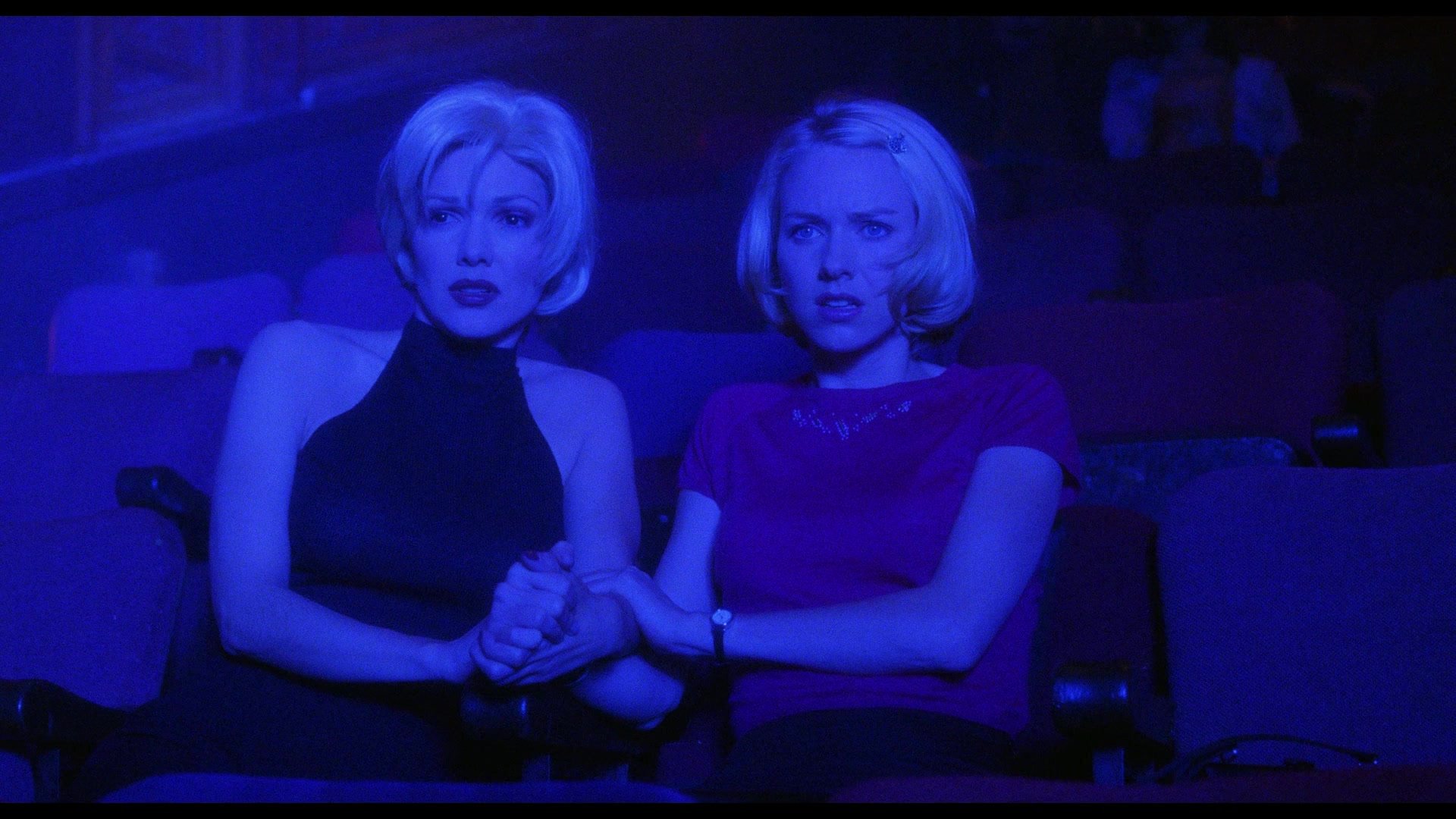
I was slow getting into David Lynch. I like a good logic puzzle, but Lynch works with dream logic which would often confound and frustrate me with its elusive solutions. That finally broke with Mulholland Drive, though my first experience left me so confused I was even a little angry. The film is fairly normal until Club Silencio, and the sharp turn into confusion was like a betrayal. My friends and I talked about it afterwards for hours, and I don’t remember when I discovered the key to the film, but it opened up not just Mulholland Drive but all of David Lynch.
I’m now going to spoil a Masterpiece that turns 25 next year. The trick of the movie is that the lengthy first two-thirds is the dream, and the disjointed ending is the reality of a person whose actions have driven her to madness and self-destruction. There’s a shot very early on where you see the point-of-view of someone landing on a pillow, a moment you’ll only clock on a 2nd viewing.
This didn’t just unlock Lynch’s approach, the (off) balance of dreams with reality is the perfect metaphor for Tinseltown, where you can be who you want to be and have all your wishes granted, only if some truly evil people manipulating the world to their desires allow it to happen. It’s a film I enjoy returning to for the clues that perceived reality is an illusion as much as seeing how tightly fantasy is intertwined with absolute hell.
Working in Production, I would want to be around for Club Silencio, which was filmed at the Tower Theatre on Broadway and 8th in Downtown Los Angeles. The lighting in that scene is exquisite whether looking at the stage or the audience.


Leave A Comment