
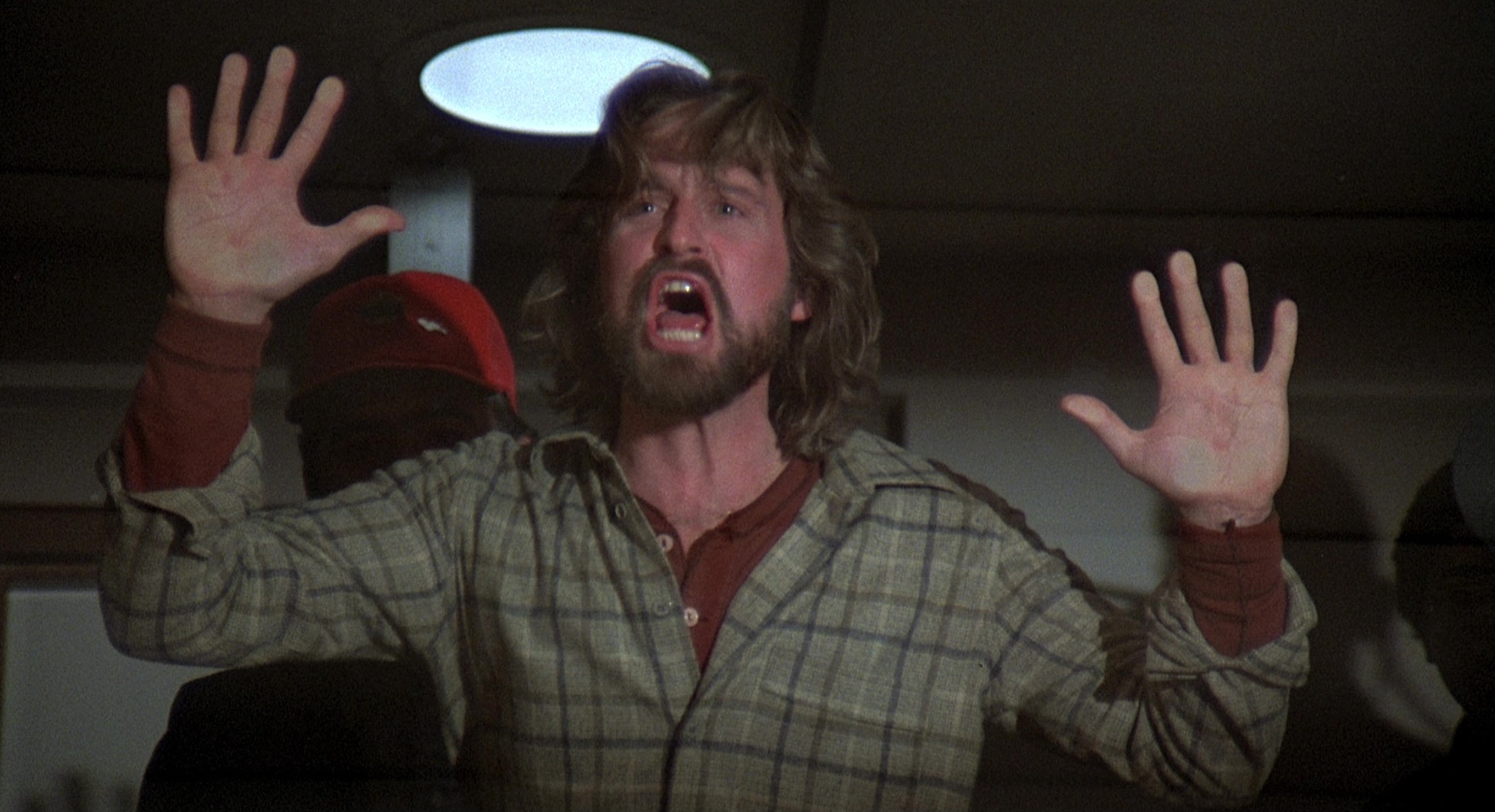
“I’d say you’re lucky to be alive. For that matter, I think we might say the same for the rest of Southern California.”
The China Syndrome found box office success when, two weeks into a disappointing release, a nuclear power plant had an accident similar to the one portrayed in the film. This makes the film sound very much “of its time”, but it remains a tense, exciting, classy, well-acted cautionary thriller, beautifully paced and delivering everything you want in smart popcorn filmmaking.
The opening scene introduces us to Jane Fonda’s Kimberly, a reporter hungry to do real news, but relegated to local fluff pieces (like a singing telegram service or a zoo animal giving birth.) There’s the very obvious corporate sexism in how her colleagues view her. Her boss is casually demeaning at a party. It’s wonderfully stated in a slightly understated manner. But we see that Kimberly is as concerned with her appearance and enjoys acting as much as she wants to be taken seriously. (She goes by the childish ‘Kimberly’ when ‘Kim’ would clearly be a more respectful option.)
The first hour leans more towards character than plot. There’s an inciting incident, and we watch Plant Operations Manager Jack Lemmon and Wilford Brimley try to prevent disaster. Our initial hook is set as Fonda (and cameraman Michael Douglas) try to figure out what they saw. This is paralleled with Lemmon investigating what his bosses are hiding. The two mysteries cross paths and then the film hits the gas. The camerawork becomes much more kinetic. Dialogue scenes go from restaurant sit downs to fast-paced walks shot from low angles. Developments become more urgent and much more dangerous.
There’s a beautiful shot of a glass door. We watch one of our leads enter and as the door closes the focus is suddenly on the truck reflected in the glass. Nothing is said, but you cinematically know the people in the truck are here to make trouble. The excitement builds until the extended climax, which intercuts a lot of events over multiple areas, but mostly stays with the three leads, like a play. I was not surprised that Fonda and Lemmon were nominated for Oscars. I’m surprised the film wasn’t nominated for editing, which beautifully balances tension with character.



Leave A Comment