
Occasionally, I will go against my narrow focus on Hollywood productions to cover a film too interesting from a production standpoint to ignore. There is no way to explain the experience of watching a film by Béla Tarr. I prepared myself by watching the opening long take a few times and putting the rest of the 140-minute film aside until I felt up to it. Béla Tarr makes Art films with a big Capital ‘A’, and this does one of the top things that will turn me off of a film. The dialogue is poetic, meaning it’s spoken in a way that makes the story damn near impossible to follow. I had a real hard time with conversations in this picture.
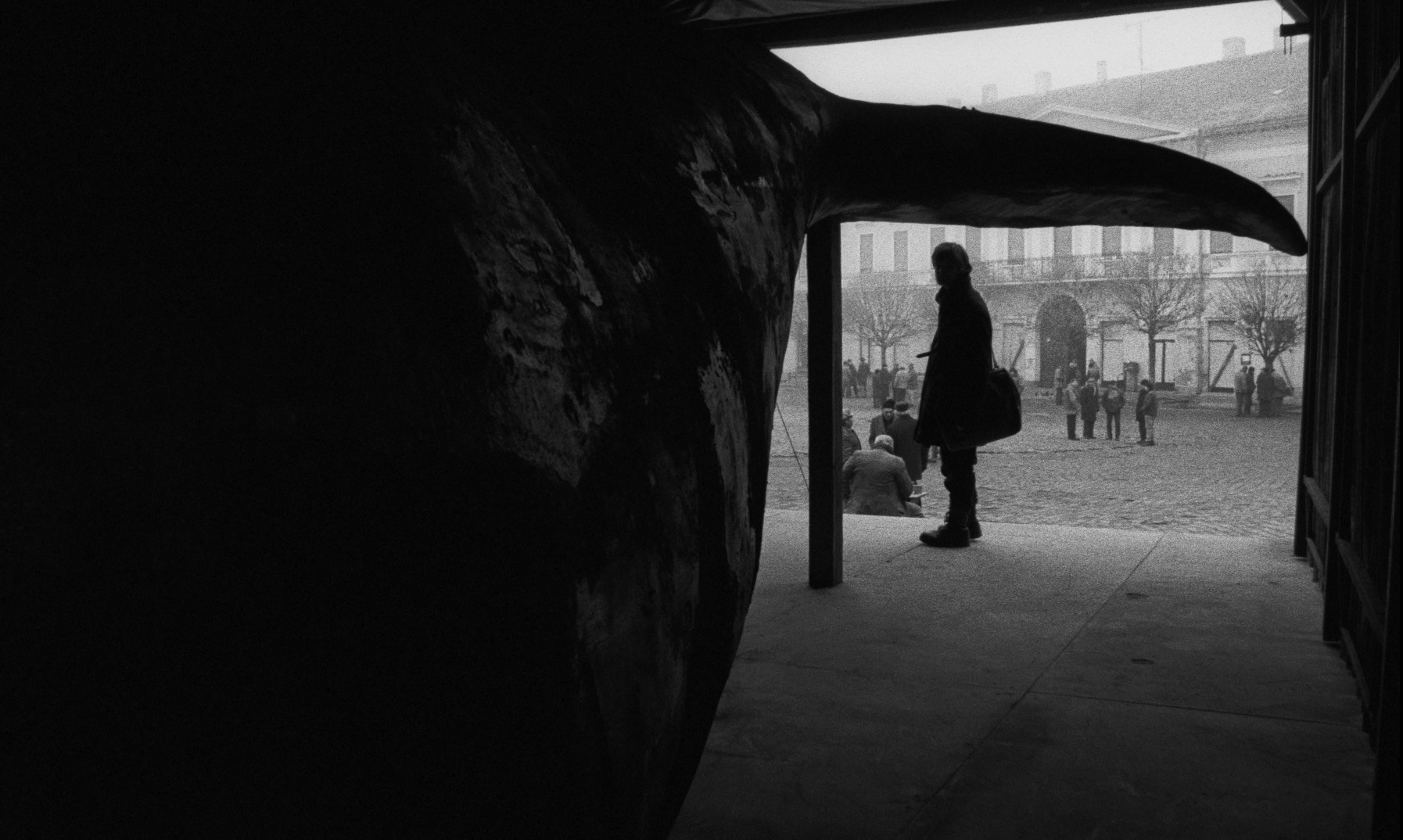
However, the camerawork and music are outstanding. The film is a total of 39 shots, so that’s 3.5 minutes per shot on average, and not long, stilted closeups of faces. The camera glides around the people or a landscape, or captures a riot like something out of Children of Men. It is painfully slow, but I’m really glad I hung in there because it’s breathtakingly cinematic.
The plot is impressionistic. A small town turns violent after a carcass of a large whale arrives as a circus attraction. That’s the basics of what I saw, and there are plenty of details I can’t explain. The effect is highly emotional, not immediately analytical, though you can write papers about what it represents. Interestingly enough, I first saw this close to my first viewing of Avatar and had similar reactions. Meaning, I most enjoyed spending time in this strange land. It opened my cinematic eyes to things I scarcely thought possible.
And this is Béla Tarr’s more accessible masterpiece. The other one is called Satantango, and it runs over 7-hours. It’s shot with a similar style, containing some of the greatest long takes you will ever see.

Leave A Comment