
There’s nothing wrong with going nowhere, baby/But we should be going nowhere fast
Because 100 is a common endpoint for a list of Greatness, I like to reserve it for my favorite “bad” movie. Of all the Great Modern Classics, this one’s the worst? We all have one of these, a film so precious to us it’s like the creators made it as a personal gift. Nobody talks about Streets of Fire anymore. The talents have moved on to bigger, more memorable projects. Nobody comes up to them on a set and asks to hear stories about the making of this film. I can’t even claim this to be some kind of buried masterpiece. At nearly every level you can find a rather large misstep, be it the occasional bit of overwritten dialogue, some fractured edits, the unnecessary supporting character who serves no purpose. What was the studio thinking even greenlighting such an unusual film?
Streets of Fire is the greatest bad movie ever made, or the worst great movie, however you choose to approach it. I’m not drawing comparisons to films like The Room or Troll 2. Streets of Fire is never that bad, but often quite brilliant, an uber bad-ass mixture of guns, neon and rock ‘n’ roll. The look may remind some of Tim Burton’s first Batman movie, only this film isn’t as dated. One of the great pleasures rewatching Streets of Fire is how little 80’s residue the film contains, probably because it’s set in an alternate reality. Credit Production Designer John Vallone and D.P. Andrew Laszlo for their amazing work.
So, what makes this movie such an unabashed joy? Why does this play like everything I want from a film rolled into 90 minutes? I started to think of a laundry list of great scenes and moments, but so much of it is tied into other elements. It isn’t just the action, but the stunt choreography, the unusual way scenes are edited together (clearly fractured, but never difficult to follow) and the beautiful blues guitar/rockabilly score by Ry Cooder.
Here’s an example. Hero Tom Cody and female mercenary assistant McCoy prepare to attack motorcycle gang and rescue Rock Goddess (and Cody’s ex) Ellen Aim. They take their positions, one inside the warehouse bar and one outside. On stage The Blasters play “One Bad Stud” and “Blue Shadows” while a tough biker chick strip/dances. (Marine Jahan was Jennifer Beals double in Flashdance, and she’s much more fierce than sexy.) Just before the action, Cody catches a glimpse of the chained up Ellen in an upstairs window. The sound mix beautifully transitions to a soulful guitar. The moment is interrupted by a motorcycle revving below. Cody answers with a loud cocking of his rifle. The score switches to a White Stripes style crunchy guitar and drum combo. Then all mayhem breaks loose, a laundry list of exciting action beats. (No film uses the butterfly knife better than this one.) The sequence ends with lead villain Willem Dafoe (his breakout role) emerging from the fire to face down our hero. “I’ll be coming for her… and I’ll be coming for you too.”
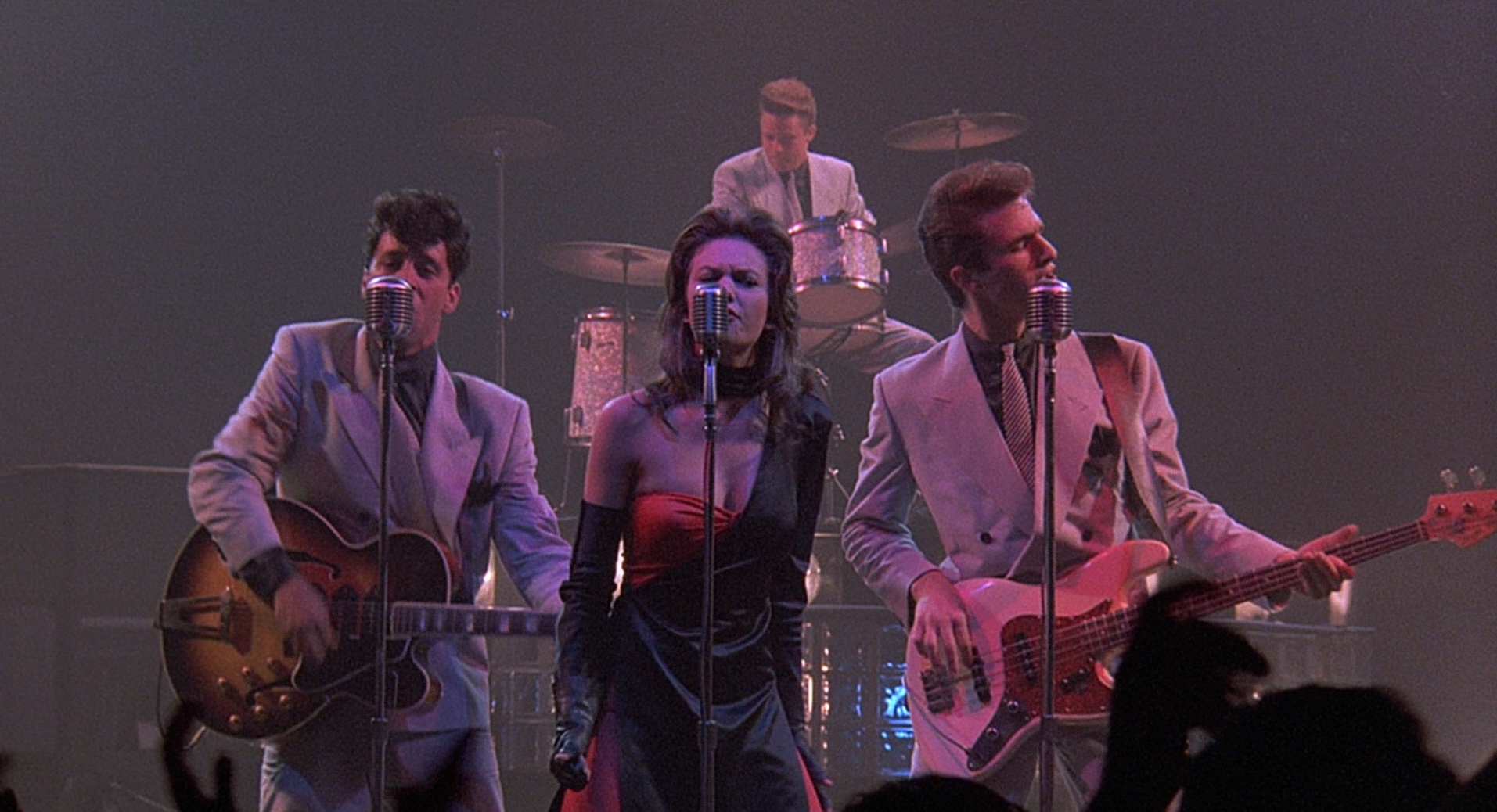
The film opens and closes with a couple of great songs by the fictional band Fire Inc. They’re epic rockers written and produced by Jim Steinman (the man behind the best of Meat Loaf. His two songs here are better than all of it.) Two of the best concert scenes ever filmed, with breathtaking cinematography and editing. Diane Lane is sensational up on that stage. I’ll admit again, the film has some big problems. The kidnapping and rescue are masterful, but the trek back to home turf suffers from clunky pacing and an insufferable performance from Rick Moranis as manager Billy Fish. He’s one-note bad throughout, but really outdoes himself during this section, nearly undoing the film. Happily, it all ends in a rousing action climax involving railroad spike hammers that was my textbook for how to block, edit and mix a fight scene.
In spite of its flaws, Streets of Fire will always be one of my favorite movies of all time. I don’t want to live in a world where it isn’t the 100th Greatest Movie Ever Made. No matter what, it will hold that title till I die. Tonight is What it Means to Be Young.



Leave A Comment