
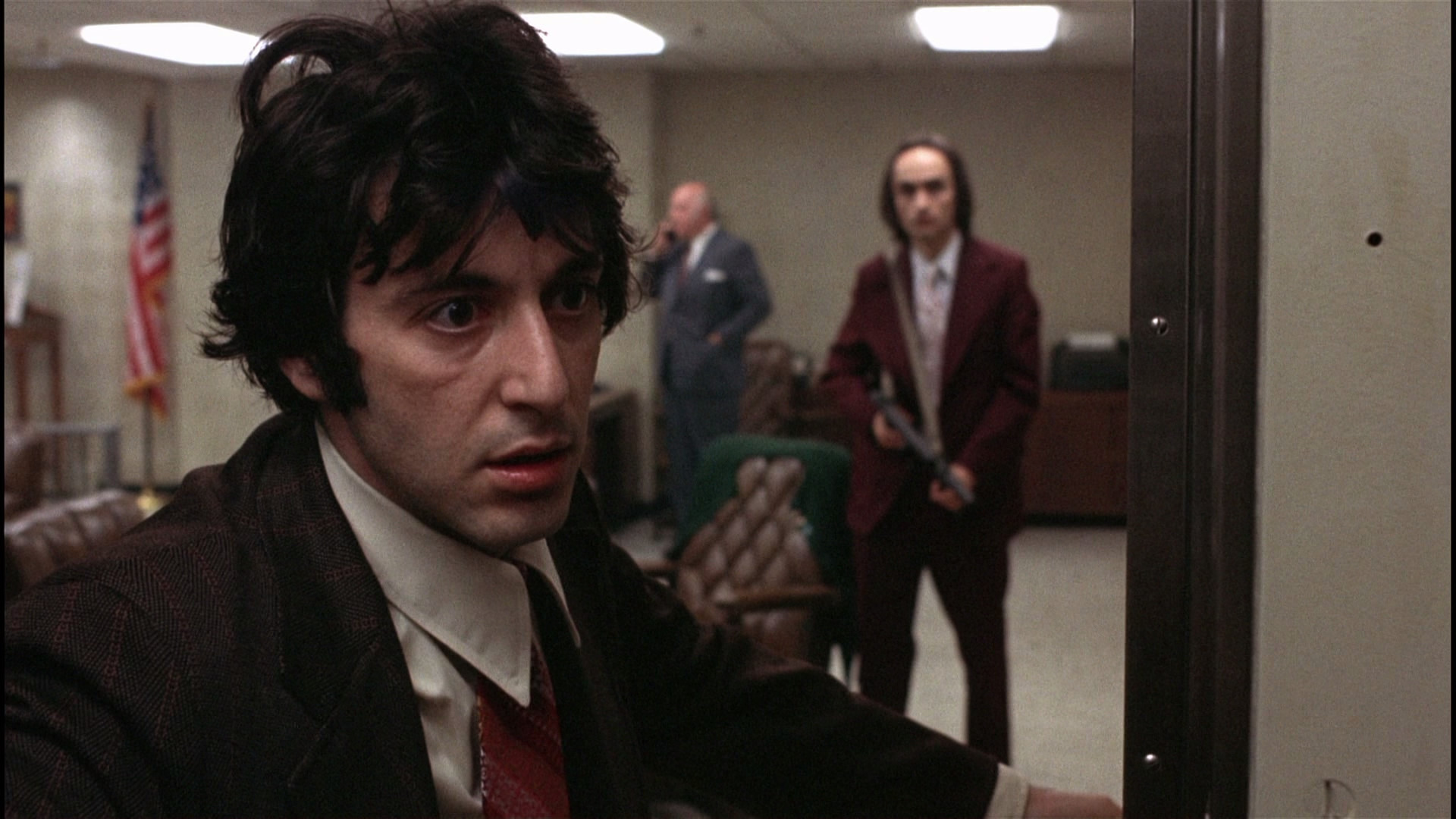
Dog Day Afternoon captures the flavor of New York City like few other films. Most movies would shoot the street scenes on location and then film the bank on a studio stage, but Lumet wanted realistic continuity. When a character enters the bank from the street, he’s not walking through a location door and then entering a fake set miles away. Locations found a block of a Brooklyn street that suited this purposes, including a vacant warehouse that could be turned into the bank. Hundreds of extras play the crowd that gathers outside the bank. According to Lumet, the crowd would swell during filming, and the professional extras would get the civilians to act appropriately for the scene. It was like a big improv exercise. People who lived on the block were offered hotel rooms if they wanted to get away from the noise, but most chose to stay. They were invited to look out their windows and gawk, just like real neighbors would do.
Dog Day Afternoon is the definitive bank robbery/hostage movie. It’s also an excellent satire of the media and pop culture celebrity, riding on what might be Al Pacino’s best performance. Maybe also John Cazale. What remains special to me about Dog Day Afternoon is how much fun it is to show the film to others. No matter what people have heard about it there’s still a lot of surprise in store, be it Chris Sarandon’s part in the drama or the final outcome. The pacing goes from methodical to deliberate and the slow down actually increases the tension. It makes one doubt the usual ending for this kind of true crime film. After being handed so many wrinkles in the formula (starting with the abrupt departure of the 3rd robber) you’re ready for the ending to twist in an unexpected direction. What happens is very effecting, and emotionally shows how closely we’ve come to feel for the characters.



Leave A Comment