

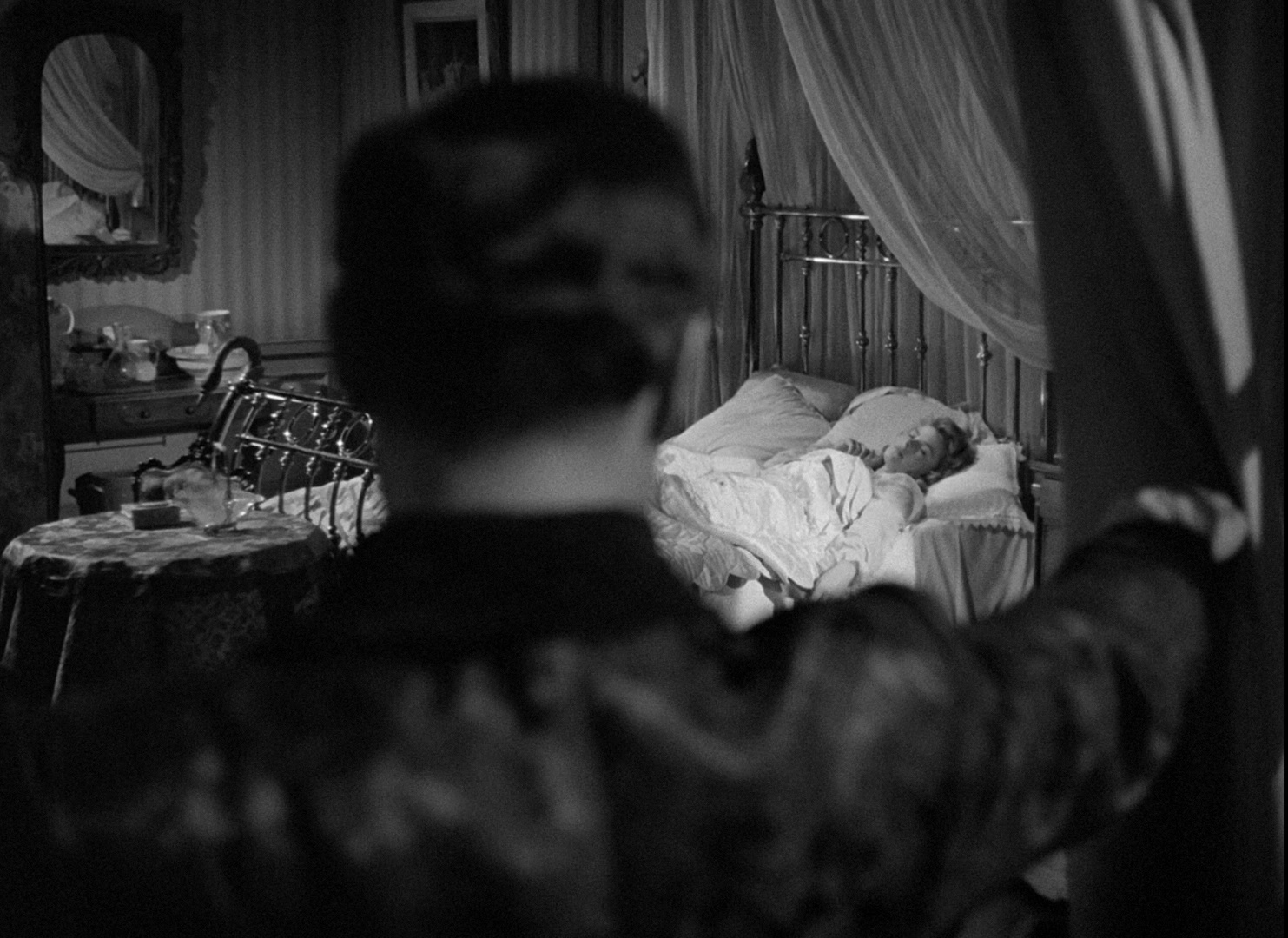
Psychological drama in Victorian England starring Ingrid Bergman as a young bride whose husband (Charles Boyer) is trying to drive her insane by making her believe she is misplacing, forgetting and seeing things. The film makes it clear that the husband is doing this. It would’ve taken some heavy lifting from the writing to try and cast suspicion elsewhere or suggest that perhaps Bergman is indeed losing her mind. More importantly, knowing Boyer is behind this means we are not in the dark, knowing as much as the villain has its own rewards. We can see him alter his manipulations to suit his needs. Sometimes he is setting something up and other times an opportunity falls into his lap and he’s able to incorporate it into his scenario. Since Boyer doesn’t have to be mysterious, both actors are allowed to have equal footing with the viewer, making the drama more satisfying. And yet we still don’t know exactly what Boyer’s end game is, so there is some mystery after all.
The film is a difficult watch at times because much of the center makes us witness to cruel psychological abuse by a trusted spouse. It could’ve been worse, Boyer never strikes Bergman though the threat occasionally appears. Through excellent set design and claustrophobic frames, Paula’s paranoia and helplessness is effectively conveyed. Even though we, as viewers, know that her insanity isn’t real, we feel the walls closing in as the situation grows more hopeless. While it’s a slight spoiler, the film would’ve been ultimately unwatchable had it gone for a darker conclusion. The finale isn’t just satisfying, it draws out the satisfaction, with multiple characters getting revenge on this louse. Bergman won an Academy Award, but this is the most memorable and daring work from Boyer, that could’ve ruined his career. Solid support from Joseph Cotten and Angela Lansbury



Leave A Comment