
I hope notes are being taken because few directors have the confidence of vision of Ridley Scott. There are extensive DVD commentaries from Scott, but I hope there’s more video of his day-to-day process because he’s one of the most prepared directors, with his epic films often coming in ahead of schedule and under budget. It’s a confidence that leads to mixed results, but often the quality of a Ridley Scott film has as much to do with the quality of the script he’s been given. He’s managed to work in multiple genres, though he’s often at the top of the list when a studio wants to make an epic historical film like Gladiator.
Listening to all those commentaries I’ve come across three keys to Ridley Scott’s success.
Scott is regarded as a visual filmmaker, but he doesn’t sweat trying to nail a particular composition. He picks the location, lets his team of artists transform it into the movie’s world, both in terms of sets and cast, stunts and background, he then looks it all over and trusts his instincts on where to place up to seven camera to capture the action. The Camera Operators compose the frames and the Editor figures out the best way to put it together.
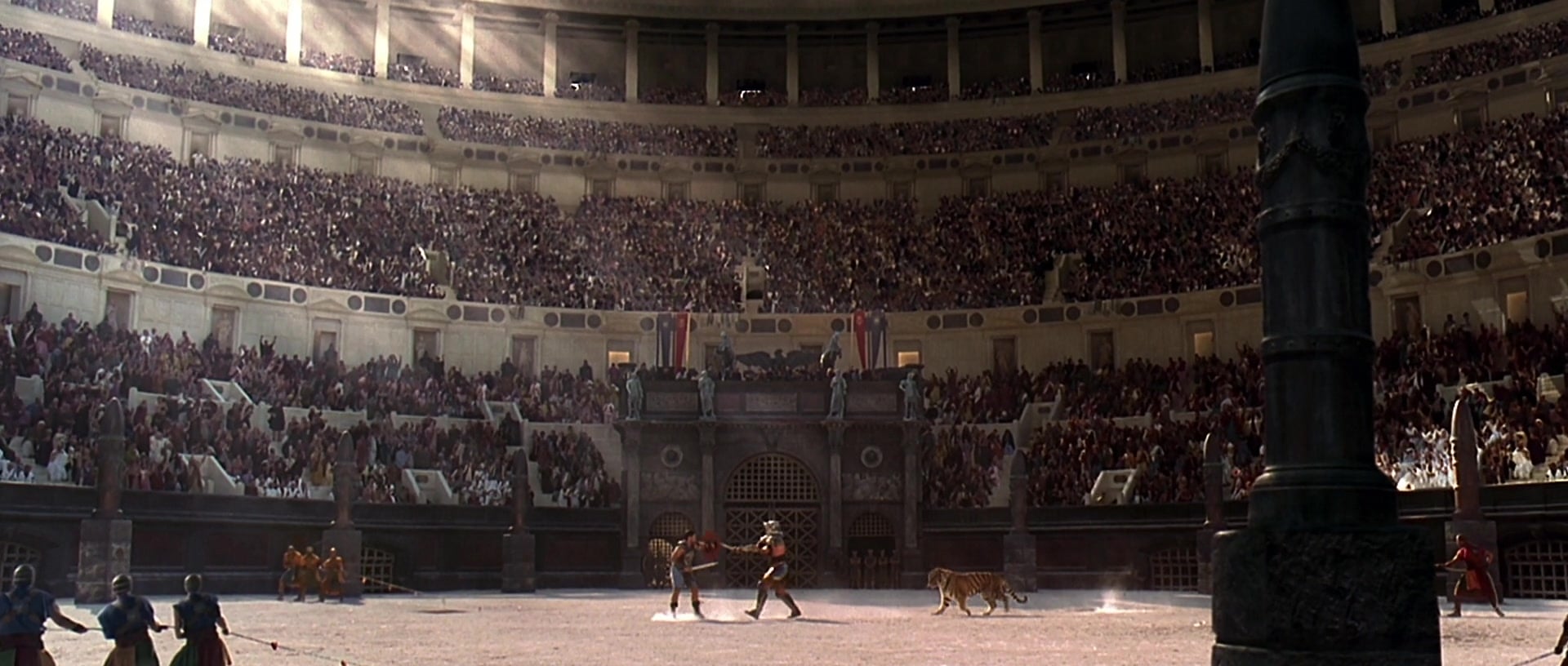
Scott doesn’t sweat mistakes or subpar effects. You can find numerous posts about Gladiator where a crew member or piece of equipment is clearly visible. Stuff that wasn’t seen in the theater, but after repeat viewings or frame-by-frame analysis you can spot people in jeans or mechanical chariot equipment. As for the effects, Scott knows an audience is already alert enough that if Russell Crowe is almost mauled by a tiger there’s no way that’s a real tiger, so why waste money and delay a film’s release for a decent enough effect people will never buy.
This ties into the third key… does it FEEL true? You do the research, you make it as realistic as possible but if a modern audience isn’t going to believe you throw it out. Gladiator has a perfect example. In reality, a Roman Emperor gesturing thumb up symbolized a sword action (and thus death), and thumb down a sheathed sword (mercy). Scott switched this to avoid confusing the audience.
Leave A Comment