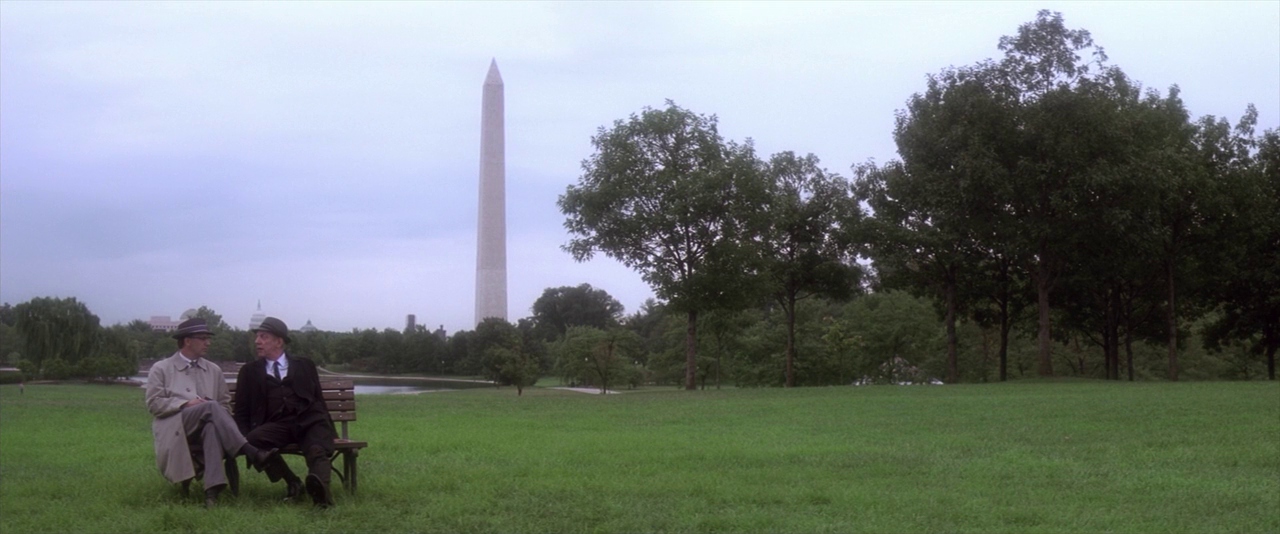
Oliver Stone boldly lays out his counter myth to the Warren report. The government sold the American people a document of lies, and Stone is presenting a tale based on truth and spun into fiction. We don’t know what really happened the day Kennedy was shot, but there are now two stories which are both true and untrue. It’s an interesting solution to the problem that also plagued Zodiac, how do you put a satisfactory ending to a film about an unsolved crime?
I come away from JFK in awe of its boundless scope and breathless pace. What Stone does with the camera and the editing he learned from Costa-Gavras’ Z, but this is the superior film because technique – the art and science of filmmaking – are near perfect. A lot of credit is also due to cinematographer Robert Richardson, who uses multiple film stocks to seamlessly blend fantasy with archive footage, and editors Pietro Scalia and Joe Hutshing. (This was the first of two Oscars for both of them.)
The amount of footage looks like it would take years to get into shape, but JFK started filming April 15, 1991 and was in theaters by Christmas. The most complicated part of the shoot was Stone’s recreation of the assassination in Dealey Plaza. That was done in two weeks, using seven cameras (35 and 16mm) and 14 different film stocks. Stone dissects the assassination of JFK, covering it from every possible vantage point. In the final 45-minute trial, he pulls everything together in a brilliant courtroom sequence where he gives alternate versions and ties in the many odd occurrences of that day. The motorcade enters the kill zone one last time as we see a coordinated plot.
Leave A Comment