
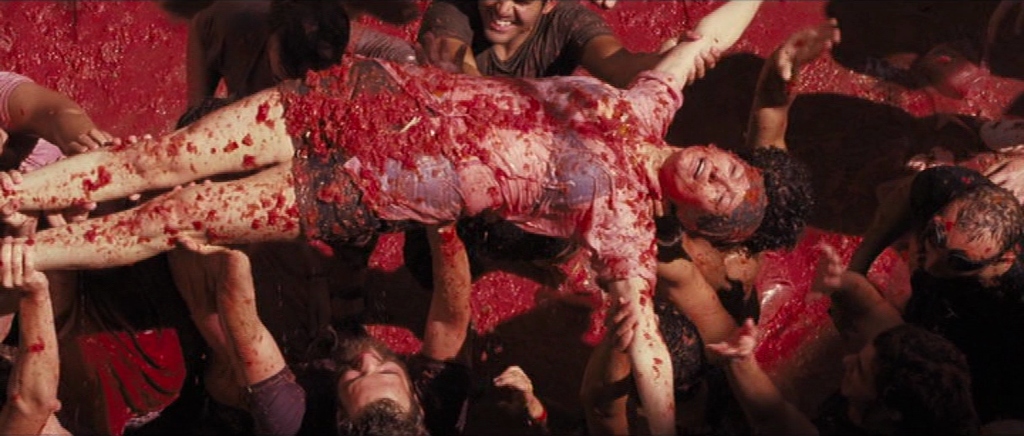
“Do you know were are you spending the afterlife?”
“Oh! Yes I do as a matter of fact! I’m going straight to hell.
Eternal damnation, the whole bit. Thanks for asking!”
Being a part of this project, one of my favorite discussions is over the inclusion or exclusion of certain films. Many sites don’t see this as a Horror film or a Thriller. The closest Letterboxd can come up with is “Twisted Dark Psychological Thriller.” It’s on They Shoot Zombies, where they write, “Tilda Swinton is the support of this film, offering a complicated look at a woman in trouble who has no idea how to deal with the problems life has dealt her. She rarely does the best thing for herself, her family and her community, but these choices are realistic. And that’s part of what’s so terrifying. The most chilling aspect of this film is how dangerous the world can be for anyone, even in the safest environments we can imagine. Even if you do everything right, tragedy can strike and do irrefutable harm to you and your loved ones.”
Ramsay comes up with ingenious ways to convey the story of a terror in development (Ezra Miller) as seen through the eyes of a woman insecure about her maternal nature (Tilda Swinton). An initial burst of montage energy used to draw you in calms into a more narrative nature, if you’re not into it at first you’re not likely to suddenly become a fan. The real turning point for me was the Halloween scene. The scary costumes in front of the headlights was pure artsy indulgence, but the attack on the house was scary, made more so by the excellent lighting and sound design.
There are 3 scenes where the mix of real noise, Kevin’s fantasy and a disquieting screech is perfectly blended. From the heavy-handed horror of Kevin’s evil to the deeply ambiguous moment involving a sink and drain cleaner. Ramsay hits the perfect tone so that all the scenes have these tiny variations that keep each wave of Kevin’s growing apathy fresh. That way, things like Kevin’s behavior during his sickness and the self-aware moment when he reminds his parents “Why would I not understand the context? I am the context,” make an impact even though the character is kept on a narrow line of focus. There certainly is a way to tell this story more conventionally, but it simply wouldn’t be as good. The drama is inside the characters, especially Swinton. What happens on the outside is merely a chain of events leading to an inevitable conclusion.


Leave A Comment