
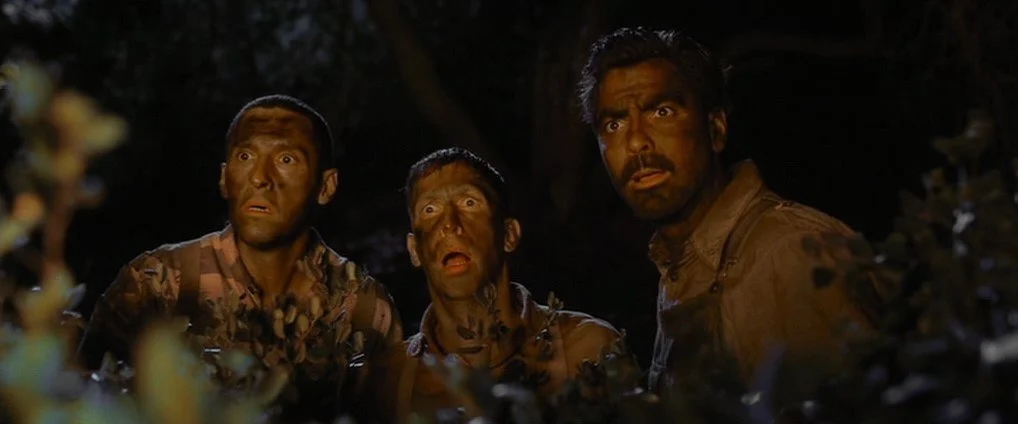
Despite all the warnings, curiosity got me to watch Ethan Coen’s Drive-Away Dolls. It was even worse than I expected, but did give a clear picture of what a Coen Bros. comedy would be without the firm technical hand of brother Joel. Now I can look at OBWAT as the wild ideas of brother Ethan executed under Joel’s precision. There’s a lot of standout material that could be analyzed in this highbrow pleasant diversion: the scene with The Sirens, the use of music, the spectacular floodwater climax, the use of digital cows. However, I have to go with Director of Photography Roger Deakins permanently changing the way movies can look by digitally scanning the entire film.
“Before I read the script, Joel and Ethan told me they had a film they wanted to shoot in the South. They imagined something dry, dusty and very hot. I’ve worked in Louisiana and Alabama so I knew that the region would be wet and the foliage would be various shades of lush green, and about half the picture would take place in exteriors. I had to find a way to desaturate the greens and give the images we were going to shoot the feeling of old, hand-tinted postcards.”
Deakins thought that if he could scan the entire film into digital format, he would have infinite control over the look in the digital suite. Deakins notes that “you can’t take a cavalier approach and just say, ‘I’m going to change that green to bright red,’ because you can end up spending your life timing just one picture. The process is not a quick fix for bad lighting or poor photography; it is a tool to be used in the same way as any other tool.”


Leave A Comment