
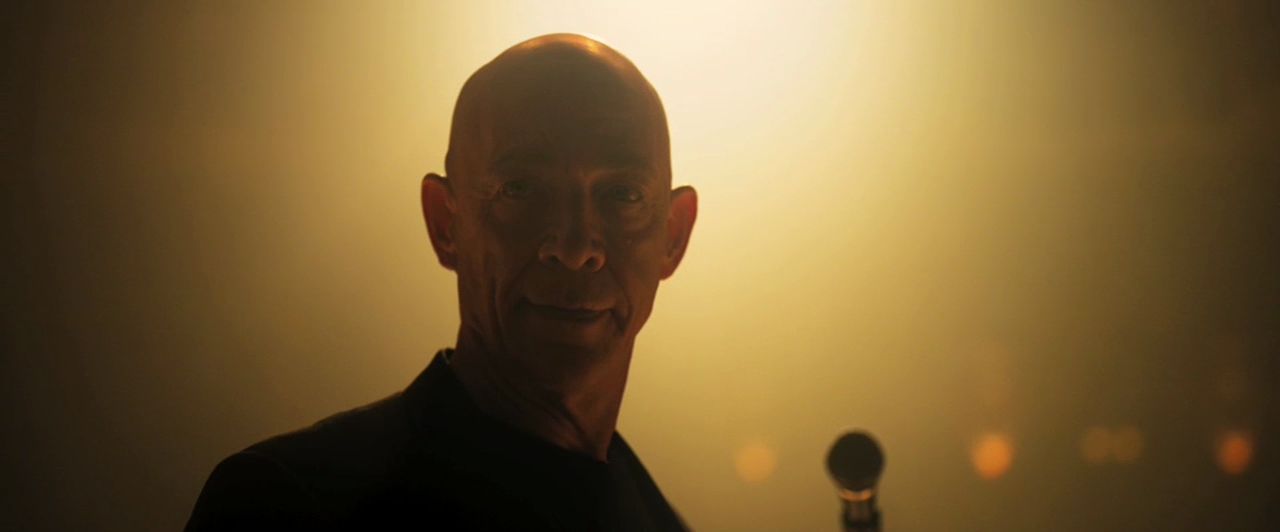
“Either you’re deliberately out of tune and sabotaging my band, or you don’t know you’re out of tune, and that’s even worse.”
If released today, there would have to be a date stamp at the beginning to let you know this takes place in the past. It’s not believable that a teacher today would be allowed to give out this level of verbal and physical abuse without knowing they were throwing their job away. That’s the core of this film, perhaps the most original take yet on abusive relationships because you asked to debate the rationale of the abuser. Andrew (Miles Teller) doesn’t want the approval of Fletcher (J.K. Simmons) because he wants to be liked. He’s being pushed because they both believe this is what it takes to be a great musician.
The scenes of abuse don’t punish the audience because Damien Chazelle gives this the intensity of a thriller, these interactions electrify the room. It’s why we need the breaks to get into Andrew’s family life and a potential girlfriend. I like these moments more on rewatch, even if only for the insight Andrew gives about how much he needs music over other people, which only makes Fletcher’s grip on him even tighter, being more important to him than anyone else.
Fletcher tells the story twice about Charlie Parker. At the beginning you see this is his belief as to what it takes to be great, but by the end it’s much more debatable. Is that the moment that ignited greatness? Or is it Parker’s reaction to the moment? Or was the moment unrelated and unnecessary? This film doesn’t have an answer, but it does leave room for the questions, just like it’s unclear if Fletcher knows how to show respect. Is he locked into being an abuser because it’s how he keeps himself from ever saying “good job.”


Leave A Comment